Choosing a Climbing Coach with Intention
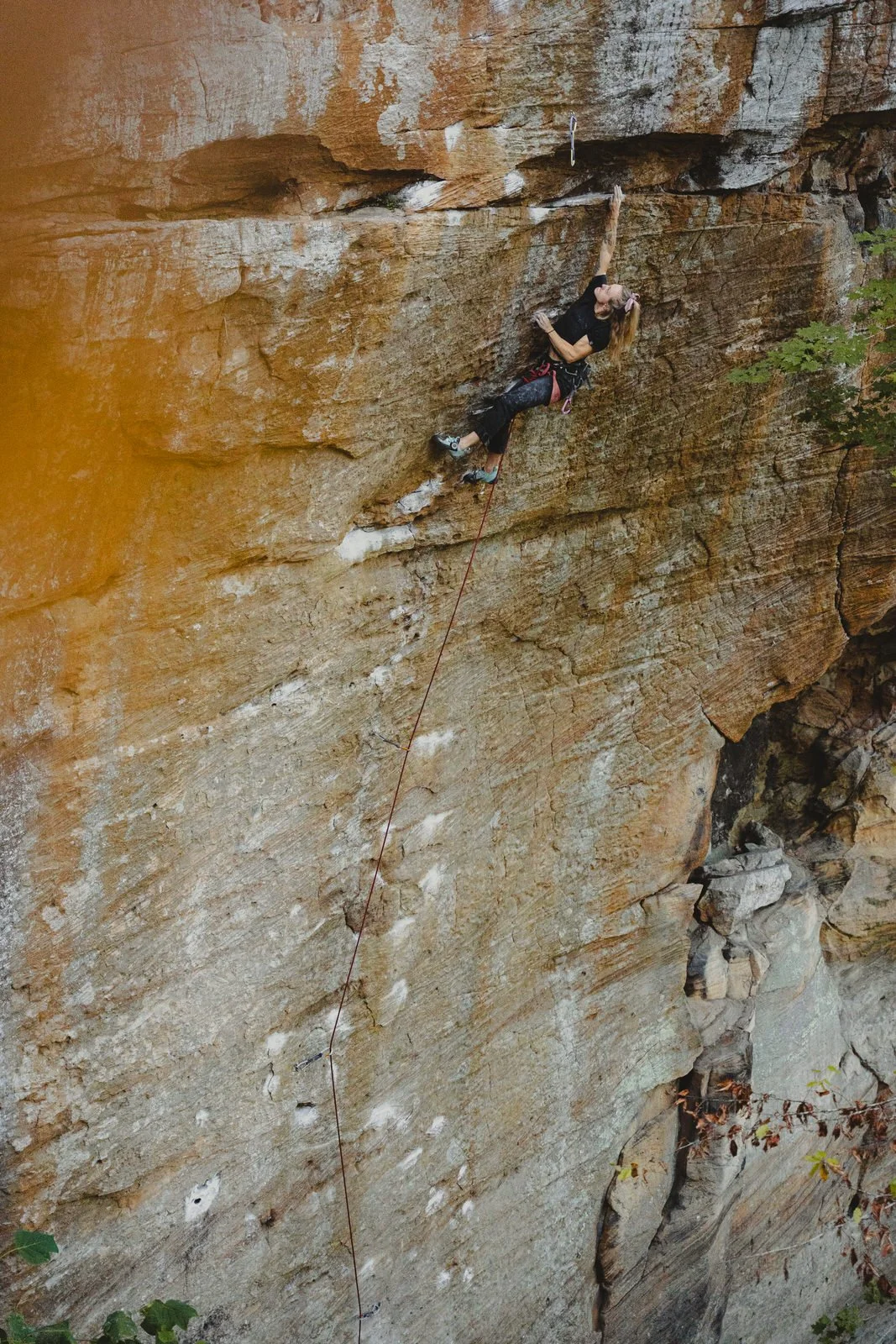
Head Coach Karly Rager discusses what to look for in a climbing coach. She explores qualifications & nuances to consider, red flags to be aware of, and addresses elephants in the room of the coaching industry.
The ultimate goal of this piece is to help you find the coach that is a truly great fit for you.
Introduction & Motivation
Working with a climbing coach is one of the best decisions you can make for your climbing, if you can find the right coach for you.
But, there are many, many climbing coaches out there. This is a good thing because you have options. The diverse offering of coaches available today means you can really find a coach who is specifically a good fit for you and your goals. But, this also means that it can be hard to comb through the tangles of options to find the best coach and program for you.
I have been actively working in this industry for the last 5+ years and have had a very interesting vantage point to watch (and be directly involved in) its evolution. During this time, I’ve worked with a lot of athletes that previously worked with other coaches and had good… and not so good things to say about those experiences.
When there were less-than-positive things to say about other coaching experiences, it was usually for one (or more) of the following reasons:
Ambiguity - The person signed up to work with someone before they really knew what they were signing up for (what was included or excluded in the program wasn’t super clear, what the program would focus on was nebulous, or the coach didn’t help the athlete figure out what they needed to work on first)
Lack of Movement Coaching / Analysis - The coaching service skipped the part where they looked at the climber, well, climbing. They just assigned a lot of exercises – whether or not those specific exercises actually targeted a weak or undeveloped part of their climbing.
The Halo Effect - They signed up because it was a big-name coaching company or pro-climber advertising services. They were influenced by branding and a quantity of Instagram followers (pseudo-validity and clout via an Instagram follower count murks the waters in a way that is a real bummer. This is an issue we will dive into below…). This is probably the most common one we see come through in our New Athlete Intake form. All that glitters isn’t gold.
And, I have to point out that I myself have made this mistake in the past. In 2019, I tried to hire a climbing coach. The lack of customer service and movement analysis in that experience is actually a big part of what inspired me to start Project Direct Coaching. If that was the industry standard, the standard needed to change.
And, I also have to be honest – I can count on one hand the number of athletes (out of 200+) that worked with me that were really, really not a good fit at all. In each case, the main issue was a combination of lack of coachability and/or entitlement. Those athletes were treated with the same professionalism as everyone else on my roster, but had really intense reactions to boundaries that were applied fairly to everyone else. It’s okay to not be the coach for everyone, and I’m okay with not being the right coach for everyone. But ideally, for the sake of everyone, we would have been able to parse that out before committing to working together.
Through clarity of program structures, improved conversations before onboarding, and pieces like this blog, we aim to reduce the occurrence of this and help you find a coach and program that really is a good fit for you.
I wanted to write this because I know and respect many coaches in this industry. And, ultimately, as coaches, it should be our #1 goal to help you progress. If you’re going to spend money on a climbing coach, I genuinely want that money to go towards your improvement as a climber – whether that’s with a coach from our team, or elsewhere.
The goal is to get the right ideas in front of you to make that decision in an informed & supported way.
What to look for in a climbing coach
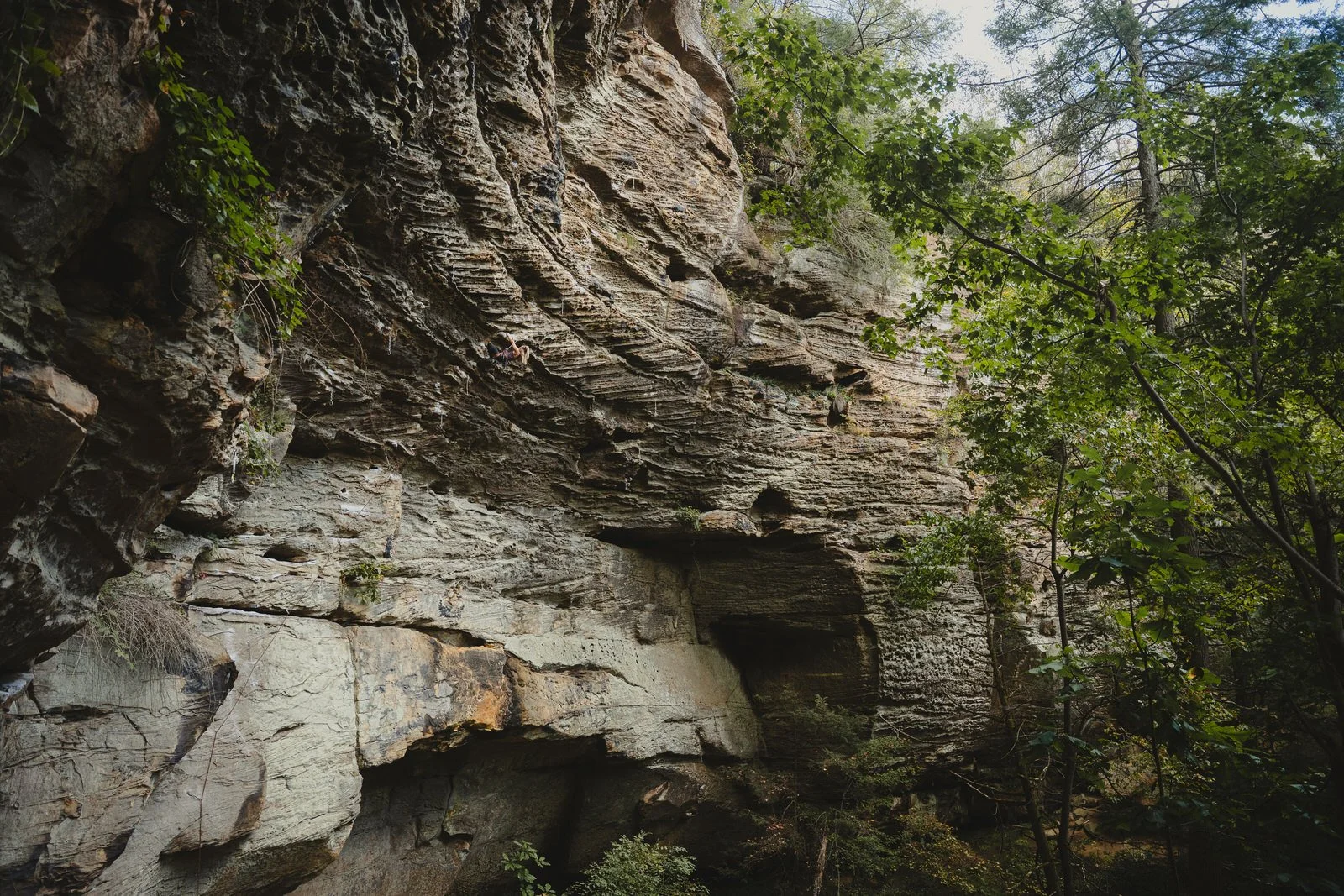
Before digging into these categories, I think it is worth being said that these are “pieces of a pie” that makes a coach a good fit for you. You can feel free to weigh these pieces of the pie as you see fit. They all matter – but you can decide how much of each portion is important to you. The goal is to just not overlook any of them and not to be misled by something shiny but hollow.
Like I said, each of these categories is important to consider. The perfect recipe for you could be different than your partner or buddy. It’s only in the red flag section below where I think you should start to fling the pie off your plate.
Climbing Experience
A climbing coach should obviously have climbing experience. However, how much experience is enough experience?
In my opinion, where and how that experience develops is probably more important than the exact number of years. A coach who has been climbing in a dedicated manner for 6-10+ years probably has seen and personally experienced enough styles and training to hold a mature understanding of the sport and bring it to you (assuming they also have coaching experience).
But another question to ask is: how much of that experience has been focused on performance? And how intense have those years of training and experience been? Casually climbing for 6 years is different from dedicating a life to climbing for 6 years.
For example, I have 16 years of climbing experience - if you started that timer the first time I put on a harness in 2009. However, I couldn’t afford most of the gear for a while so I would say I really started climbing with intent in 2012. So, 13 years of dedicated experience.
Another question to consider is where this climbing experience has occurred and if that’s related to your goals. For example, most of my 13 years of dedicated, focused climbing experience has been on sport climbing and multipitch climbing. So, even beyond 13 years of focused experience, we could say 13 years of focus in sport and multi-pitch climbing. While I’ve bouldered up to v8/9 and ice climbed up to WI5, I would not consider myself the specialist in coaching for either of those disciplines because of the lack of depth of experience here compared to my sport and multi-pitch climbing.
P.S… It is for this reason that we have coaches on our team that have different areas of expertise. So you can work with the coach that speaks your language.
In an extreme example, we would want you to consider if a specialized Indian Creek climber should be coaching a boulderer with an interest in high balls on granite crimps.
Or, if a coach with extensive coaching for competition bouldering but that has rarely sport climbed outside should be coaching an outdoor sport climber.
Area of experience is incredibly important. The disciplines of climbing have gotten more and more specialized as they have advanced. The more advanced you are in your chosen discipline(s), the more important it is that your coach has that experience to match your needs.
The top mark: The potential coach has climbed routes that you would like to climb and/or overcome obstacles in their climbing that are similar to yours.
Specialty and Discipline
In the spectrum of climbing – from competition bouldering to outdoor bouldering to sport climbing to trad climbing to multipitch climbing to ice/alpine climbing – the differences in the disciplines of our sport are truly massive.
Your coach should have deep experience in the area of the sport that matters the most to you.
This could be in the discipline, but it could also be a specialty that speaks to you more specifically:
Do you want to strength train more effectively?
Have you hit a plateau?
Do you struggle mentally with pressure to send, your relationship with the sport, or fear of falling?
Do you find you don’t know what you need to improve?
Have you tried a “standard training plan” but you stopped progressing after a few cycles?
These are things to bring up in that initial conversation.
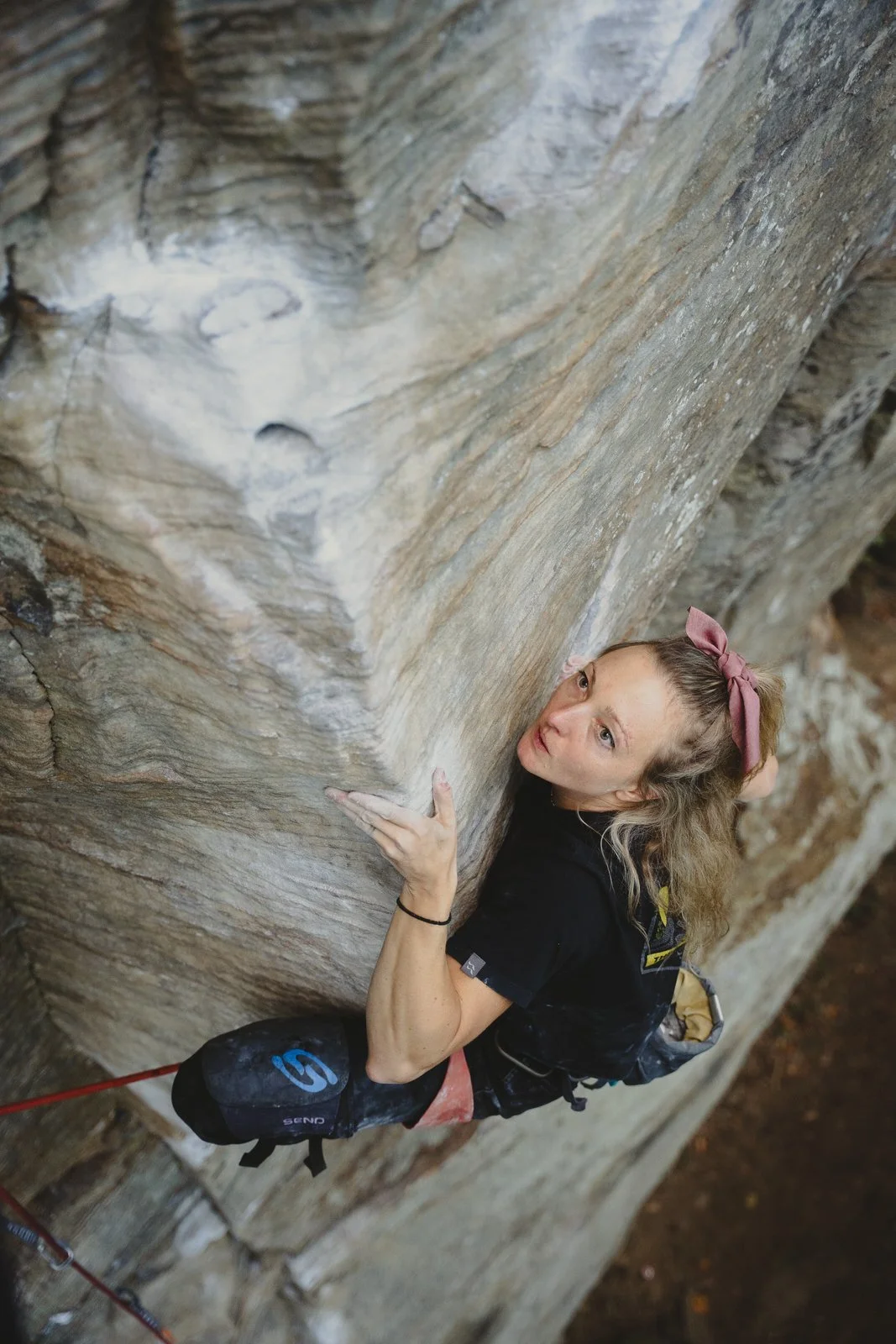
Coaches are going to be so excited to talk to you about their specialty!
If they are not, then maybe they aren’t the coach for you. Or, maybe their specialty isn’t quite right for you.
When in doubt, just ask, “What’s the most common thing people come to you for?” and the coach should be able to tell you what you need to know.
The top mark: The potential coach has deep experience in your discipline or desired area of improvement.
Coaching Experience
Coaching experience is incredibly different from climbing experience.
Getting yourself to a goal doesn’t mean jack shit about your ability to get others – especially if they don’t look / move / have similar athletic backgrounds as you – anywhere at all. Coaching is not about saying “well this is what I did and it worked for me.” You are not your coach.
A good coach doesn’t look at an athlete through the lens of their own climbing. They look at everything that athlete is bringing to the table and everything that athlete might need to develop within the constructs of their life. And, that might look very different than what the coach did to develop themselves.
There are athletes out that need way less strength training than me. There are athletes with different goals & locations than me. There are athletes with different backgrounds and experiences with trying hard at heights than me.
Through years of coaching experience, asking the right questions, and consistent dialogue with athletes, you learn how to listen differently than when you are just “good at climbing”.
A good coach starts by knowing what questions to ask. A great coach knows what follow up questions to ask. And the coach I want for you knows those two things and knows what to do with the information.
Cuing for lifts, movement feedback that the coach themselves can either replicate, show you in a drill, or explain so well that your mind is blown about what you just learned should be the bare minimum for any coach you are considering working with.
The top mark: The potential coach has coached an athlete like you to a goal very similar to yours. Ask them about that!
Note: if you aren’t sure about a potential coach, ask them if they have any in-person sessions or shorter-term commitment offerings. Not everyone has this, but if you are on the fence, see what they can give you in terms of helping you understand what the experience will be like so you can make an informed decision without making as big of a time commitment.
Looking to connect with Project Direct in-person? Click here to learn more about our in-person offerings.
Certifications
In my opinion, any climbing coach should be, at a minimum, a certified personal trainer (CPT) from a reputable organization (NASM and NSCA are some of the most well-known options).
Expired certifications (“on the shelf” certifications) have merit as well, but please do your research. Make sure someone that is going to be programming you and your body into stress (that is what a workout is – increased load and stress on your body to elicit an adaptation) has been educated on how to do so safely.
You can ask your potential coach for proof of this certification. I would encourage you to do so.
Please ask these questions for sake of your own time, money, and safety.
Below is a list of certifications that hold merit. This list isn’t meant to be exhaustive, but to serve as a starting point.
P.S… The absence of this information on some coaching websites is shocking to me. WHO are you signing up to work with? What type of climbing do they do and coach? What are their certifications? Why can’t we know that before paying?
If you are looking at working with someone because their custom plans are cheaper or because they have a huge Instagram following, please at least ask to have a conversation with who you will be working with, specifically, before paying for something.
Please make sure they can show you their educational background as a trainer and coach. IG followers and talking like they know what they are doing are not the same as having an objective board testing their knowledge.
CSCS - Certified Strength and Conditioning Specialist
DPT - Doctor of Physical Therapy
BCS - Behavior Change Specialist
OCS - Orthopaedic Clinical Specialist
AMGA Single Pitch Instructor
AMGA Rock Guide
AMGA Alpine Guide
IFMGA Mountain Guide
A note on AMGA certifications: These are guiding certifications, and do not involve designing training programs. They do have merit, however, in showing the technical proficiency of a coach and could be a glimpse into the kind of experience they have in the outdoor climbing space.
Get to know your potential coach
Testimonials
Testimonials matter because you can learn about someone’s direct experience. At a minimum, you can get an understanding of the level of professionalism that someone is providing to their clients through testimonials and Google reviews.
Want to read what people are saying about Project Direct? Click here to read our reviews on Google.
You can also get a feel for what stuck out to other climbers as helpful from your potential coach’s coaching style or process.
If you want to get some more helpful information out of a testimonial, perhaps ask your potential coach if they have any athletes that would be willing to chat with them for a minute or if they have any testimonials that specifically address the challenge the athlete is facing.
Connor was excellent at tailoring sessions for both indoor and outdoor days. His enthusiastic movement insights during video analysis helped me address inefficiencies l'd been overlooking for years.
While fitness naturally fluctuates, the technical improvements I gained have already translated into better performance on routes — and I expect those benefits to stay with me for a long time.
Fast-forward to now, and I'm not scared anymore. It's kind of crazy. Karly is the best investment I have made for my climbing. She has completely transformed my head game. I am performing better than ever and having more fun. Headpoint Training is truly priceless.
Interviews, writing, in-person clinics
Many coaches have information and interviews available (websites, social media, YouTube, etc…). Podcasts especially are good places to hear a coach speak outside of something that has been curated by themselves.
Writing – Blogs like this one and/ or join our email list at the bottom of this page
In-person lessons – At the Climb Clinic in Golden, CO
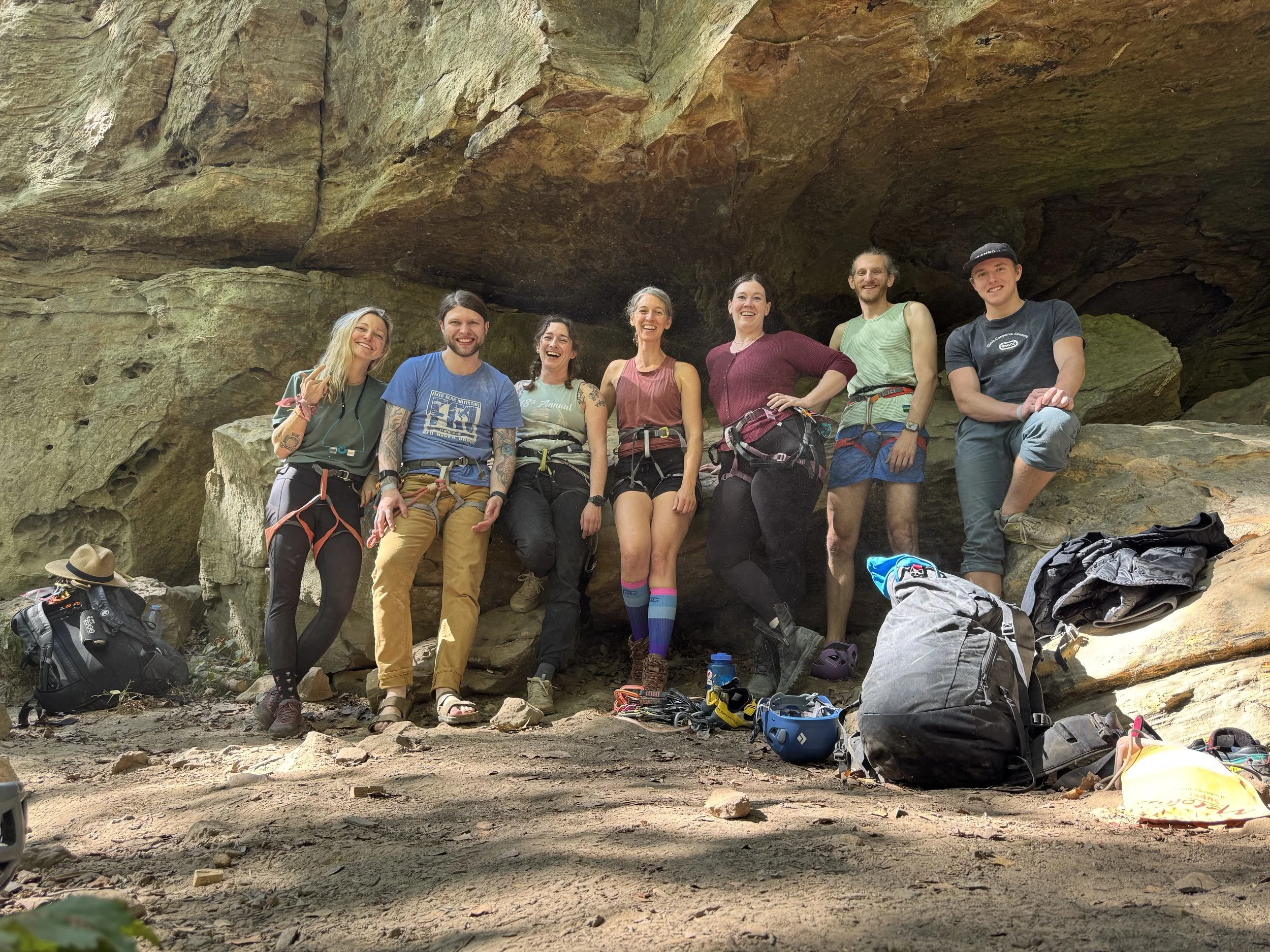
Clinics - Head Coach Karly also teaches 3 or 4 in-person clinics per year at climbing festivals (Lander, Red River Gorge, New River Gorge, etc…) Sign up for our email list (bottom of this page!) and/or follow us on Instagram for clinic announcements and updates.
The top mark: After you’ve spent some time reading or listening to a coach, you feel like you have learned something, thought about something in a new way, and/or enjoyed the way they presented information.
Values & Personality
All of the things above being the same, ask yourself…
Would I want to go climbing with this coach?
Do I feel I share similar values as this coach?
Do I feel comfortable being myself around this coach?
Do I feel like this coach and I connect on a human level?
Many, many coaches can help you with what you want to improve upon, but I’ve seen it repeatedly that the athletes that have a human connection with their coaches are going to show up the most fully and, therefore, get the most out of their work and time together.
With all of the climbing coaches out there, wouldn’t it be sweet to really connect with yours? It’s worth the time to find that coach.
The top mark: You can answer yes to most of those questions above.
Elephants in the room
“Instagram Coaches”
As the climbing coaching industry has expanded beyond a few companies (largely in 2020 when there was a boom of independent freelance work on a macro-scale from the Covid-19 outbreak), it has seen its share of growing pains.
Among those is the usage of social media, especially Instagram and YouTube, to marketing coaching services. That trend, in of itself, isn't necessarily a bad thing. It’s a free service that growing business owners can use to reach and connect with a customer base.
As a business owner in this time period, I see that we are actually quite privileged to be able to market for almost free - it lowered the cost of entry into the industry. In some ways, this is great - it allowed people that didn’t come from power and wealth in a cultural or generational sense to have a shot at business ownership at all..
However, perceptions can get contorted when we decide on a service based on any inherent bias we see in the app or when we are driven to things based on an algorithm instead of merit.
The algorithm doesn’t discern merit. It’s just looking for ways to keep you on the app for longer.
Follower count – Someone’s follower count is a really good example of the halo effect: “XXXX people follow this person or company, so they must be the industry standard or industry’s best.”
Why this is dangerous: I have worked with several athletes that started their climbing training & coaching journey with one of these big-name companies and didn’t see the results they were looking for (usually because they had major movement inefficiencies and the coach never ever looked at or coached them on movement at all).
The real danger though, is that this athlete can jump to the next conclusion which sounds like, “well, this is the best / most well-known coach out there. So, if their program didn’t work for me, then climbing training & coaching in general won’t work for me at all.”
This is the part that really worries us. Because for those athletes that did find us, we saw that education on movement concepts, practice, and consistent movement feedback made a huge difference for them. But these things weren’t a part of the “best in industry” programming at all (if we use follower count as a metric for legitimacy at all).
For the athletes that have found their way to us (or other great coaches) after these experiences, we are so stoked to show them what true coaching looks like (a combination of physical training, movement feedback, and mental preparedness that addresses their specific weaknesses or blind spots).
Likes – This is perhaps less prevalent as a bias that affects decision making... but it is still important to point out that likes on a post are driven by what Meta & the algorithm push into your feed because they believe it will keep you on an app for longer. Again, pretty clearly, this has nothing to do with a coach’s merit.
So here we are, shaking our fists at the algorithm behind closed doors but bowing to it each day as the sun breaks in the east. What irony. I hope this piece can break up a bit of that.
We can navigate this with some thoughtfulness, taking time to consider the full picture, and maintaining our critical thinking.
If you aren’t sure about a coach’s merit, please refer to the top part of this blog and ask questions. If a coach shows resistance to answering those questions, you have your answer. No amount of follower counts or viral reels can tell you what you really need to know about working with someone like a conversation and a list of questions can.
Having a ton of followers doesn’t make you a good coach and it doesn’t make you a bad coach - it simply means you are good at marketing on a platform. It is possible that a coach does have a big social media presence and is a great coach. Follower count and coach merit are neither mutually exclusive nor mutually inclusive.
Therefore, the term “Instagram Coach” really rings hollow because it doesn’t tell you anything at all. Someone’s clout on an app that will probably be obsolete in 10 years just isn’t that related to their ability to coach well.
It’s your independent, critical thinking that will help you find your coach - so just be sure to use it.
The list above and conversations can help you find out what you need to know to make an informed decision that is right for you.
Professional climbers turned coaches
Similar to the ideas above, someone being a professional climber does not mean that they are a skilled or qualified coach.
Knowing how and teaching how are two different things. It’s possible to do both, but they are different skills.
Teaching movement, re-writing headgame habits, and effectively programming strength training is a skill set required of coaches that goes beyond climbing well. Some professional athletes have that skill set - some do not.
And, just like being a professional climber doesn’t mean someone is a great coach. It also doesn’t mean that they are a bad coach.
Similar to the the term “Instagram coach”, someone’s sponsorship status as an athlete is just not relevant information to consider.
Why?
Because professional climbers are operating as marketing tools for climbing gear companies whose leadership have decided that this climber’s achievements and/or story is worth sharing (for now) with the end goal of selling more climbing gear. Sorry if that’s hard for anyone to read, but I’m going to call a spade a spade here.
Once you really see and recognize what a professional climber is in this context, the connection to being a good coach dismantles itself even further.
Again, this isn’t a case of always or never.
Rather, this is a case of learning to see what qualifies… and what muddles.
Use your own critical thinking skills - with the initial list of qualifications above - to discern what is really best for you.
How hard should your coach climb?
Phew, this one should be fun to write. I’ll do my best.
How hard should your coach climb?
Part of this depends on how hard you climb. But a big part also depends on what specific challenges you are facing. Part of this depends on their coaching experience.
A coach that has sent 5.12+ routes, has physical training qualifications, and coaching experience can absolutely help someone looking to climb their first 5.12. That climber doesn’t need their coach to send 5.14b. That extra chunk of letter grades isn’t necessarily super relevant to a climber that is just starting to climb 5.11+/5.12-.
A coach that has sent some 5.12+ routes and has sports psychology qualifications and coaching experience can also absolutely help a 5.14 climber with their head game for performance pressure. That climber doesn’t need their coach to send harder than them, they need a coach that can rework how the climber thinks on redpoint burns and helps them access their procedural memory in times of stress.
A coach that sends v12 but has never trad climbed probably can’t do jack shit for a climber that struggles with fear of falling on a gear.
A coach that climbs 5.13 can coach a climber to 5.14 if they really know how to program and coach movement & build redpointing skills.
A coach that climbs 5.13 and is an excellent strength coach can coach a climber to 5.14 if strength has been identified as a key area of weakness.
If you’re uninterested in working with someone because they don’t climb 2 letter grades higher than you, you’ve over-simplified the picture.
If you’re uninterested in working with someone because they haven’t helped climbers or themselves overcome the same obstacles you are facing… you have a valid point.
Clear as mud?
Ultimately, the grade your coach can climb is reflective of their climbing experience, but that remains only a slice of the pie that you will benefit from considering.
Rather than just asking how hard they climb, refer to the list of considerations above and come to a more complete understanding about the coach.
Sexism
I don’t think there is one non-male, independent climbing coach that thrives in this industry that doesn’t have an absolutely stacked resume.
I don't think there is one non-male, independent climbing coach that doesn’t have certifications listed on their website and marketing material.
However, there are male climbing coaches that lack these certifications that do pretty well in this industry.
Meaning, there are different standards for non-males in this industry. Non-males are asked to prove what men are assumed to already have, and it’s important to note this and call it what it is: sexism.
These double standards permeate through the climbing and coaching industry… sometimes subconsciously, sometimes overtly.
Don’t believe me? Try and find a successful female coach without an absolutely stacked resume. It’s impossible. But you can find a male coach selling services with no climbing achievements or certifications listed.
Do you think it is interesting that the term “Instagram coaches” wasn’t around when all the climbing coaching companies were run only by males (even if they had very large IG followings and used IG to market)? However, when female coaches came onto the scene, this term started to be flung around to discredit them.
I’m no stranger to sexism (working as a structural engineer in the construction industry for 4 years left me with many stories). But I do want to acknowledge it and draw your attention to it because it exists here too. There is a better way forward, and it starts with acknowledging the elephant in the room.
Through social and cultural conditioning, we can tend to believe someone is more qualified because of a demographic that they fall into rather than from their qualifications.
We can also believe and trust someone less for this same reason.
Take a moment with this and the list of objective categories above before investing money into a coaching company that’s riding the coattails of the patriarchy into the sunset of your dollar bills.
Red Flags
Now that we’ve covered important topics to consider when looking for a climbing coach and addressed some elephants in the room, I want to provide a list of red flags that can help you just drop any bullocks out of your list of considerations.
🚩 No certifications or past certifications
🚩 Pushes you to sign up too quickly
🚩 Lacks the level of experience you seek – Why would you sign up for coaching with someone who lacks experience you seek when there are so many coaches out there that have that experience? I have referred athletes to other, non-Project Direct coaches a handful of times when I thought would be a better fit than me & I’d do it again. There is a coach for you, it’s just a matter of finding them.
🚩 Not custom to you – The word custom gets through around a lot. If the coach is not watching you climb, lift, or adjusting your programming at least once a week, you are not getting a custom training plan. They should be able to answer confidently why you are doing each and every single item in your workout. If that’s not the case, you are not getting a custom plan.
🚩 Does not look at your climbing movement – If someone is to help you with training for climbing, they need to be looking at your climbing movement.
🚩 Thinks they have nothing left to learn about climbing or coaching. We all have more to learn. Be wary of someone who puts themselves so above others that you don’t feel you can ask questions. That’s a power dynamic that benefits only one person (not you).
Everyone can benefit from a coach
The minute you think you know everything is the minute you stop progressing.
This is a important, but tricky concept because if you aren’t aware of your blindspots… you naturally might think you don’t have blindspots. It’s a Catch-22. It can make folks think they wouldn't benefit from a coach because they are looking at climbing progression through the lens of what they already know vs. the lens of considering there are things they don’t know about… yet.
For example: until you introduce the tool of a scorpion kick to dissipate momentum, a climber might not even know that tools exist to dissipate momentum. So, they think that they know all there is to know about bouldering and they just are stuck at their genetic limit of v7. How can they see this blind spot if they lack the language to even describe a concept they have never heard of?
Another example: until you introduce the tool of mental habits automated over time, a climber might think all they should do for fear of falling is practice falls. When those don’t help them commit to moves above bolts, and if they don’t find a better perspective, they might think they just don’t “have what it takes”. Their inability to see their blindspot’s solution is directly linked to their lack of knowledge about the topic, and they don’t know what they don’t know – so how would they come to the conclusion that there is something left to learn?
Here lies the ultimate challenge for us at Project Direct: how to explain this in a way that opens up a wider world of continuous learning.
It’s important that we walk the walk here too.
As proof of point, I have a climbing coach outside of Project Direct because I truly value coaching and the growth that comes from another perspective. We aren’t out here advertising coaching services and also believing we have nothing else to learn. Rather, we are saying we have something to teach. And it’s important we don’t conflate those two concepts with each other.
We are coaching because we have a vast and deep amount of coaching and climbing experience that allows us to teach on a broad variety of topics. But that doesn’t mean we are done learning ourselves.
Our potential is directly tied to our ability to admit that we still have more to learn. So is yours.
Coaching is an avenue for that learning to occur.
Parting Thoughts
Where the industry sits today is unlikely to be where it sits 5 years from now
Like any new industry, the climbing coaching industry will probably look different five years from now than it does today. I honestly expect a decreased use of Instagram, and increased use of YouTube, improved coaching because of the competition in the industry, and improvements in the way we teach and coach movement skills on training boards.
I am particularly interested in how coaching for headgame (fear of falling & performance pressure) will continue to evolve, as it has been historically the most undercooked of the elements of climbing that we can support and coach.
I am hopeful that we can see less sexism in the industry of climbing coaching and climbing as a whole.
I am hopeful that we can find ways to foster fulfillment in this sport beyond grades. I’d love to see more focus on the way our goals require us to make changes to who we are and how we move; making a send the symptom of the development we have undergone in ourselves.
We want to continue to help move this industry forward for the sake of climbers, and that’s something I know you’ll see us working on in the next 5 years.
Gratitude
Lastly, I want to extend gratitude to the athletes that we have coached over the last 5+ years for sharing your climbing with us and trusting us as your coaches. Without you all, we wouldn’t be here. Watching you work hard, grow, and succeed is our favorite thing.
I also want to extend gratitude to all of the coaches on the Project Direct team (Dana, Casey, Pat, and Connor) who have their own areas of expertise & continue to push us to be better coaches, more organized on the back end, and more visible on the front end. I am really stoked on our team and what we have built here - and to continue to improve in the coming years.
Thanks for reading. Thanks for being along for the ride. I hope this helps you in your journey to finding a coach that’s a great fit for you.